
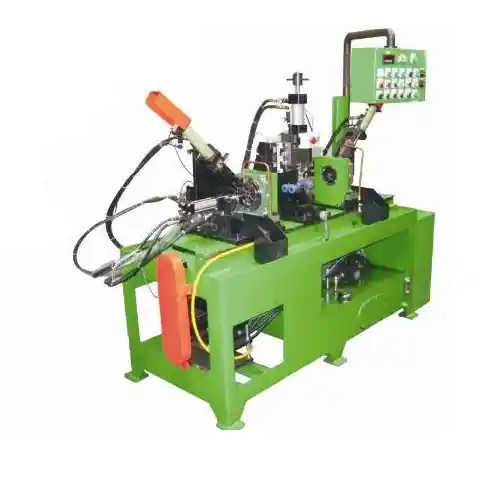
HANDLEBAR DOUBLE ENDS CUTTING AND CHAMFERING
Model:JD-03H
Add to inquiry
Product Specifications
|
Detail
Double-End Cutting and Chamfering in One Setup
- Combines cutting and chamfering into a single process cycle
- Reduces separate manual operations for each tube end
- Improves consistency of handlebar length and symmetry
- Minimizes handling damage such as scratches and dents
- Creates a more stable takt time for front-end processing
- Electric chamfering machine setup helps standardize both cutting and chamfering results in one station
Process Advantages
- Chamfers both ends to defined angles simultaneously
- Improves left-right symmetry of finished bars
- Reduces variation caused by operator handling differences
- Electric chamfering machine maintains stable chamfer angles across batch production
Typical Applications and Line Position
Position in the Handlebar Production Flow
- Placed after tube preparation and before bending
- Ensures consistent length and chamfer before forming
- Supports smoother downstream bending and finishing processes
- Acts as a key front-end stabilization station
- Electric chamfering machine helps align upstream cutting with downstream forming requirements
Suitable Users
- Bicycle handlebar manufacturers (flat bars, riser bars)
- Complete bicycle factories with in-house production lines
- Factories upgrading from manual chamfering processes
- Electric chamfering machine is suitable for replacing manual or semi-manual tube-end finishing
Changeover and Future Model Support
Handling Different Diameters and Materials
- Supports standard steel and aluminum handlebar tubes
- Clamping inserts or sleeves are replaced for diameter changes
- Cutting and chamfering parameters are adjusted per material
- Sample checks are used before mass production starts
- Electric chamfering machine allows quick setup adjustment for mixed model production
Benefits for Production Engineering
Measurable Impact on the Line
- More stable and predictable cycle time per handlebar
- Reduced variation between operators and shifts
- Lower risk of tube-end scratches and handling damage
- Easier integration with automated feeding or unloading systems
FAQ – Handlebar Double-End Cutting and Chamfering
1. Can It Handle Different Handlebar Models?
- Yes, supports multiple lengths within machine range
- Requires clamping insert changes for diameter variation
- Adjustable cutting and chamfering settings per model
- Supports flexible multi-model production
2. Can It Be Integrated into an Automated Line?
- Supports manual loading and unloading operation
- Can connect with conveyors or automatic feeders
- Suitable for semi-automatic production setups
- Expandable toward full automation systems
3. What Should Be Prepared Before Quotation?
- Tube diameters such as Ø22.2, Ø25.4, Ø31.8
- Material type and wall thickness
- Target output per hour or per shift
- Existing line layout and related equipment