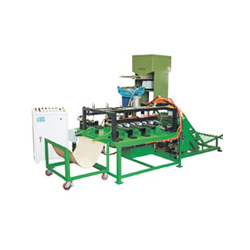
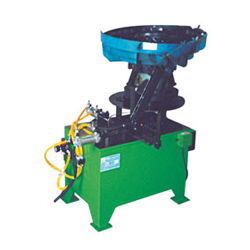
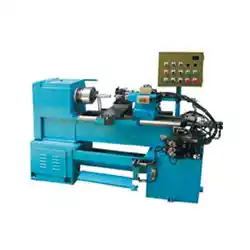
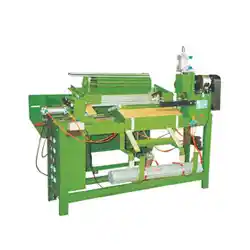
Furniture, sports, medical equipment and equipment
- Applies to table legs, chair frames, gym structures, medical beds, rails, and related metal tube components
- Handles multiple tube types with consistent dimensional control requirements
- Focuses on stable welding and drilling accuracy across different production environments
- Combines tube processing, welding, and drilling into a structured production flow
- Supported by Jui Chih as a welding equipment company with experience from bicycle frame production and multi-industry tube applications
Benefits of Using Structured Tube Processing Equipment
- Improves tube geometry control before welding to reduce downstream assembly issues
- Maintains stable weld quality even when operator teams change
- Reduces setup time when switching between product models
- Allows bicycle frame production know-how to be applied to other tube-based products
- Supports integration of tube roller machines, welding equipment, and drilling machines into one process flow
FAQ – Furniture, Sports and Medical Tube Equipment
1. How Does Automatic Welding Help When Skilled Welders Are Limited?
- Uses fixtures and preset parameters to control part positioning
- Applies consistent welding conditions for each cycle
- Reduces variation caused by different operators
- Lowers rework rates and improves output stability
- Helps meet strength and appearance requirements across shifts
2. Can One Production Line Serve Both Bicycle and Furniture or Sports Products?
- Yes, in many cases shared production is possible
- Tube roller machines and welding systems can be adapted with fixtures
- Suitable for furniture legs, sports frames, and medical components
- Planning is based on tube sizes and product geometry requirements
- Helps maximize equipment utilization across product categories
3. When Should a Factory Consider Adding Drilling and Nut Press-In Machines?
- Needed when hole positions must match assembly jigs precisely
- Useful when manual drilling causes inconsistency or delays
- Important when producing high volumes of similar parts daily
- Reduces cycle time bottlenecks in production lines
- Improves overall stability of drilling and assembly processes